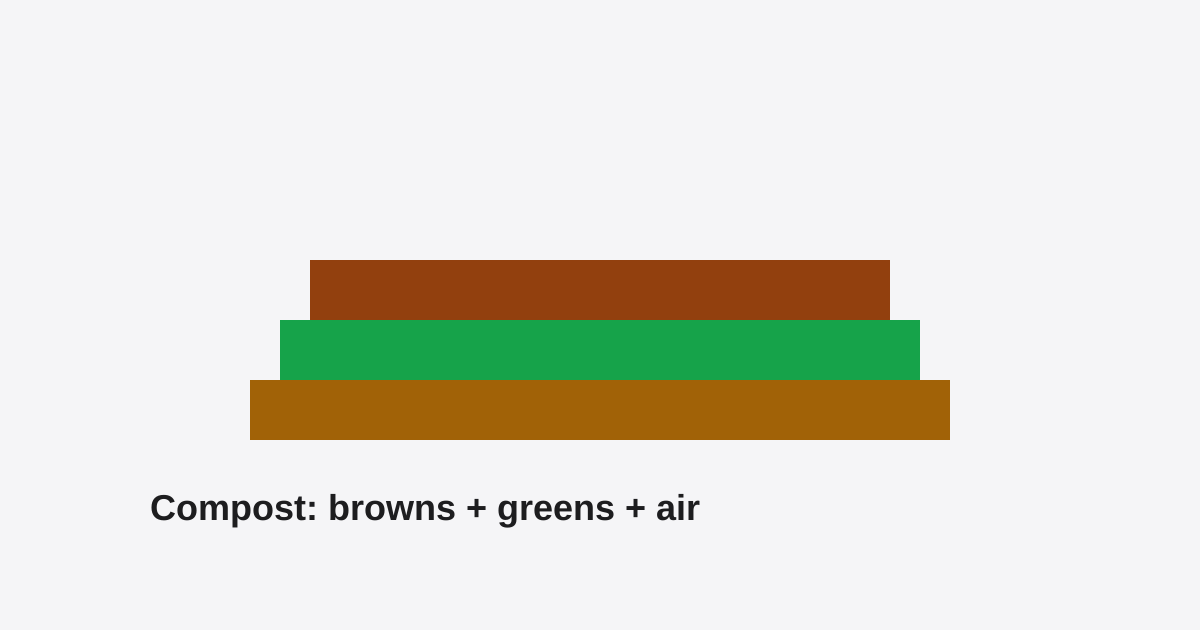
What compost actually does
Compost feeds the soil, not the plant directly. It adds organic matter, improves structure, holds water, and feeds the soil life that makes nutrients available to roots. Its nutrient content is low and slow — a bed fed only with compost will not show a fast green-up, but it will improve every year. Work out the right mix with the compost ratio calculator.
What fertilizer actually does
Fertilizer feeds the plant directly, with known amounts of nitrogen, phosphorus and potassium. It works fast — days, not months — which is why it fixes a yellowing crop quickly. But it does nothing for soil structure, and used alone for years it can leave soil lifeless. Calculate the amount with the fertilizer calculator, and never exceed the label rate.
When to use which
Use compost every season as the base: dig it in before planting and mulch with it. Use fertilizer when a soil test shows a specific shortage, or when a heavy feeder like tomatoes or brassicas needs a boost mid-season. If you can only afford one, choose compost — it fixes the soil, and healthy soil needs less fertilizer over time.
Can you use both?
Yes, and most good gardens do. Compost in spring, fertilizer as a targeted top-up during the season. The mistake is using fertilizer as a substitute for compost: the plants look fed while the soil underneath gets worse.
The money test
Compost you make yourself is nearly free; bought compost costs money but improves the bed for years. Fertilizer is cheap per bag but must be bought every season. Over five years, a compost-first garden usually costs less and performs better than a fertilizer-only one.
Compost vs fertilizer vs manure: the full comparison
Manure sits between compost and fertilizer, and confusing the three is where most mistakes start. Compost is decomposed organic matter — finished, earthy, low in nutrients but rich in organic matter. Fertilizer is concentrated plant food with a declared NPK, fast and precise. Manure is animal waste, aged or fresh: it adds more nutrients than compost, often higher in nitrogen, and it also adds organic matter — but fresh manure is too strong, can burn plants and can carry pathogens, so only well-rotted manure belongs on food beds. If you are unsure what to buy, compost is the safest always-helpful option; if your plants need food now, fertilizer is the tool; if you want both food and soil building and can source it well-rotted, manure does both.
| Feature | Compost | Fertilizer | Manure (well-rotted) |
|---|---|---|---|
| Main job | Improve soil | Feed plants fast | Both, moderately |
| NPK | Low, variable, undeclared | Declared on label | Moderate, variable |
| Speed | Slow, months | Fast, days | Medium, weeks |
| Soil structure | Improves | No effect | Improves |
| Microbial life | Supports | Can reduce if overused | Supports |
| Risk if overused | Low | Burn, salt build-up, runoff | Burn if fresh |
How to read a fertilizer label: NPK explained
Every fertilizer bag carries three numbers — NPK — and only the first one matters for the most common calculation. A bag labelled 10-10-10 contains 10% nitrogen, 10% phosphorus and 10% potassium by weight; a 20-10-10 bag contains 20% nitrogen, so you need half as much product for the same nitrogen. The recommendation is usually given as pounds of nitrogen per 1,000 square feet, so the product you need is (nitrogen needed × area ÷ 1,000) ÷ (nitrogen % ÷ 100) — the fertilizer calculator does this for you. High nitrogen grows leaves, phosphorus supports roots and flowering, potassium supports overall hardiness and fruit — but a soil test should decide which one you actually need, because adding phosphorus to soil that already has plenty wastes money and can harm soil life. Slow-release and controlled-release fertilizers cost more but feed over weeks instead of days, which suits containers and sandy soil that leach fast.
Making compost that actually finishes
Most home compost fails for one of three reasons: too dry, too wet, or the wrong mix. Build the pile with about 2–3 parts browns (dry leaves, straw, shredded cardboard) to 1 part greens (fresh grass, vegetable peelings, coffee grounds) by volume — the compost ratio calculator works out the amounts — and keep it as moist as a wrung-out sponge. Turn it every couple of weeks to add air; a pile that never gets turned goes slimy and slow, while a pile that is too dry simply sits there. Chop or shred material first, because smaller pieces break down far faster than whole branches and leaves. A hot pile (130–150°F in the centre) kills weed seeds and finishes in weeks; a cold pile still works, but takes months and will not kill seeds, so keep seeding weeds out of it. Finished compost is dark, crumbly and smells like soil, with no recognisable original material — if you can still see leaves or food, it needs more time.
A year of feeding: a seasonal plan
Spring is compost season: spread 1–2 inches over beds before planting and dig it in lightly, which is the single most valuable feeding job of the year. Summer is fertilizer season, but only where needed: side-dress heavy feeders like tomatoes and brassicas mid-season, and stop feeding late in the season so plants harden off instead of pushing soft growth into autumn. Autumn is the second compost season: mulch beds with compost or leaves, which protects soil over winter and feeds soil life while you are not looking. Winter is for planning and testing, not feeding: take a soil sample in autumn so results arrive in time to amend before spring, and do not fertilize frozen or dormant soil, where nutrients simply wash away. Follow this rhythm and you will buy less fertilizer every year, because the soil itself gets better at holding and supplying nutrients.
Mistakes: over-fertilizing and fresh manure
More fertilizer is not better — it is the most expensive way to harm plants. Too much nitrogen gives lush leaves and no fruit, scorches roots, and washes into waterways; the signs are brown leaf edges, wilting despite wet soil, and a white crust on the surface. If you have over-fertilized, water deeply to flush salts, stop feeding, and do not try to fix it with more of anything. Fresh manure is the other classic mistake: it is too hot, full of ammonia and pathogens, and it can burn roots and contaminate food crops — compost it first for at least six months, or buy it already well-rotted. And never fertilize a dry plant in hot sun: water first, feed second, and feed in the cool of the morning or evening.
Frequently asked questions
Can compost burn plants?
Finished compost cannot burn plants. Unfinished compost — still hot and smelling sharp — can, so let it finish before spreading it on beds.
Do I still need fertilizer if I use compost?
Sometimes. Compost supplies most nutrients slowly, but a soil test may still show a shortage, especially of nitrogen for leafy crops. Test first, then decide.
Is manure a compost or a fertilizer?
Both, in between: it adds organic matter like compost and nutrients faster than compost. Always use well-rotted manure, never fresh, on food beds.
Does compost replace fertilizer completely?
Sometimes, but not automatically. If soil nutrient levels are already adequate, compost alone can be enough — and growers who apply compost annually often cut fertilizer use sharply without yield loss. But demanding crops or a documented deficiency still need targeted fertilizer; a soil test decides.
How much compost should I spread on a bed?
About 1–2 inches top-dressed each season, or 20% by volume when mixing into a bed. More is rarely harmful, but a very thick layer of unfinished compost can smother seedlings — use finished compost only.
Related calculators: Compost Ratio Calculator · Fertilizer Calculator (NPK) · Raised Bed Soil Mix Calculator · All calculators →
Related guides: Compost Basics · Soil Testing Basics · All guides →
Last reviewed: 5 November 2026 · Sources: local extension guidance for regional advice.